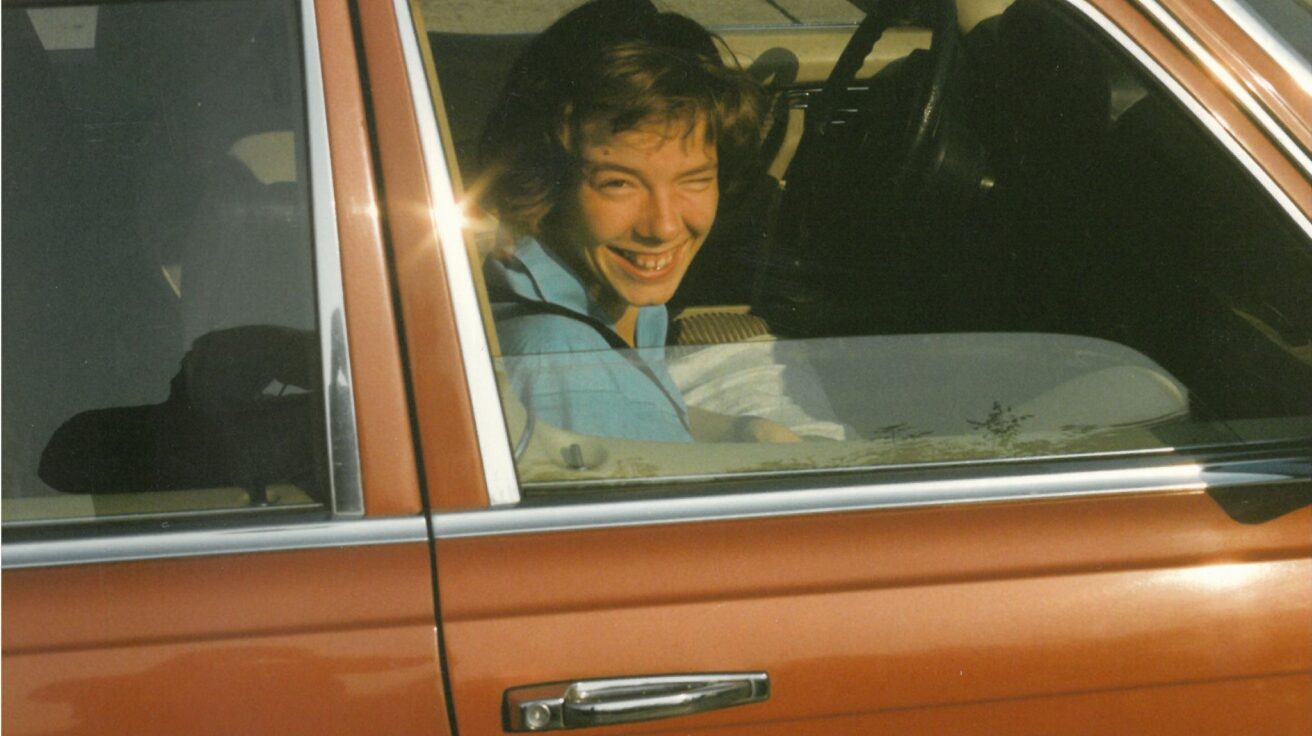
“The concepts of zeitgeist and nostalgia are the most motivating aspects”
An interview with Kata Martincsák, project leader of Jelenarchívum—the Hungarian Museum of Ethnography’s new initiative: a community photo and story collection dedicated to preserving Hungarian family and vernacular photography from the 1990s onward.
Jelenarchívum (1) was launched as part of the MaDok programme (2) at the Museum of Ethnography in Budapest. What institutional motivations led the museum to initiate a project that brings together analogue and digital vernacular photographs in a digital space, as a continuation of Fortepan (3)?
One of the most important relationships of the Museum of Ethnography with vernacular photography is the ethnographic, anthropological interest, and within this, fieldwork is given a special role. If you look at the museum's collection of photographs, you will find a lot of everyday photographs related to fieldwork. In many cases, the kind of fieldwork that the MaDok programme conducts can be complemented by everyday photography, and a social museum like the Ethnographic Museum can really benefit from that. The MaDok programme focuses on the preservation of contemporary artefacts and the museum documentation of the present. Obviously, when you go out into the field as a museologist and interview people or take photographs, you are engaging in an ethnographic approach. We have a number of exhibitions that include everyday photographs or highlight the narrative storytelling of the owners of these photographs in some aspect, including our permanent exhibition that opened last year. The Museum of Ethnography saw an opportunity in this: this archive will be a research base for ethnographers as well as for those who want to do ethnography, visual culture, or other archive-related research as PhD students during their university studies. The current archive is obviously not exclusively for the academic community, so if artists or visitors active in other fields wish to use it, they will be able to do so with the permission of the institution. We are working on thematic campaigns, and it will take several years to see where the current archive is going.
What is the methodology behind the collection? When you receive a photograph, what happens to it? Have those who have contributed to the project so far been specifically invited, or has the uploading become at least partly self-managed?
We are constantly working with developers and uploaders to make the site more user-friendly. The first campaign on the Jelenarchívum site, "Play, adventure, excursion," was the brainchild of Judit Gellér, the former project manager of the archive – the second campaign, "Cars Heading to the Sea," (4) is my idea. In the beginning, we spread the word about the project among our friends and colleagues, and I offered them both options, asking them to choose which campaign they would like to upload pictures and stories to. This was done during the test period so that we could filter out any bugs on the website in time. The site is not yet "ready," but uploading is working without any problems.
So the people who have uploaded so far are mostly museum colleagues with good writing skills. The purpose of the current archive is not necessarily to focus on the photographic material per se. We are just as interested in the stories that go with the photographs. I am currently the site admin and project manager, so I filter all the stories. Our next campaigns will most likely be linked to the museum's research projects – such as the exhibition on the theme of “buhera” (5).
In April, we will also launch a communication campaign and hold dedicated uploading workshops at the Museum of Ethnography’s bookshop. These are open and free events, and we also want to build an ambassador system with photographers, writers, poets, visual artists – people who are enthusiastic about vernacular photography. We also plan to work with individuals and organisations who are in some way experts on the theme of the next collection campaign.
We are also working to ensure that Jelenarchívum is visually present in as many places as possible within the museum. The institution's primary goal is to get people to log in, connect, and upload instantly – so the site has been developed for phones and tablets. Due to data protection legislation, we had to decide that only people over 18 could upload to the site – of course, this doesn't mean that the writer of the story couldn't be under 18, possibly with the help of a parent. We will soon be going out to schools to run workshops – where students will also have to fill in a “prior declaration with a parent” in order to have their photos added to the archive.
An important aspect of the site is that the keywords for the photos are also provided by the uploaders – so individual creativity is also present at this level of the project, allowing future researchers to work from keywords that emerge from the uploaders' own stories. Of course, as an admin, I check that the keywords provided are actually related to the stories.
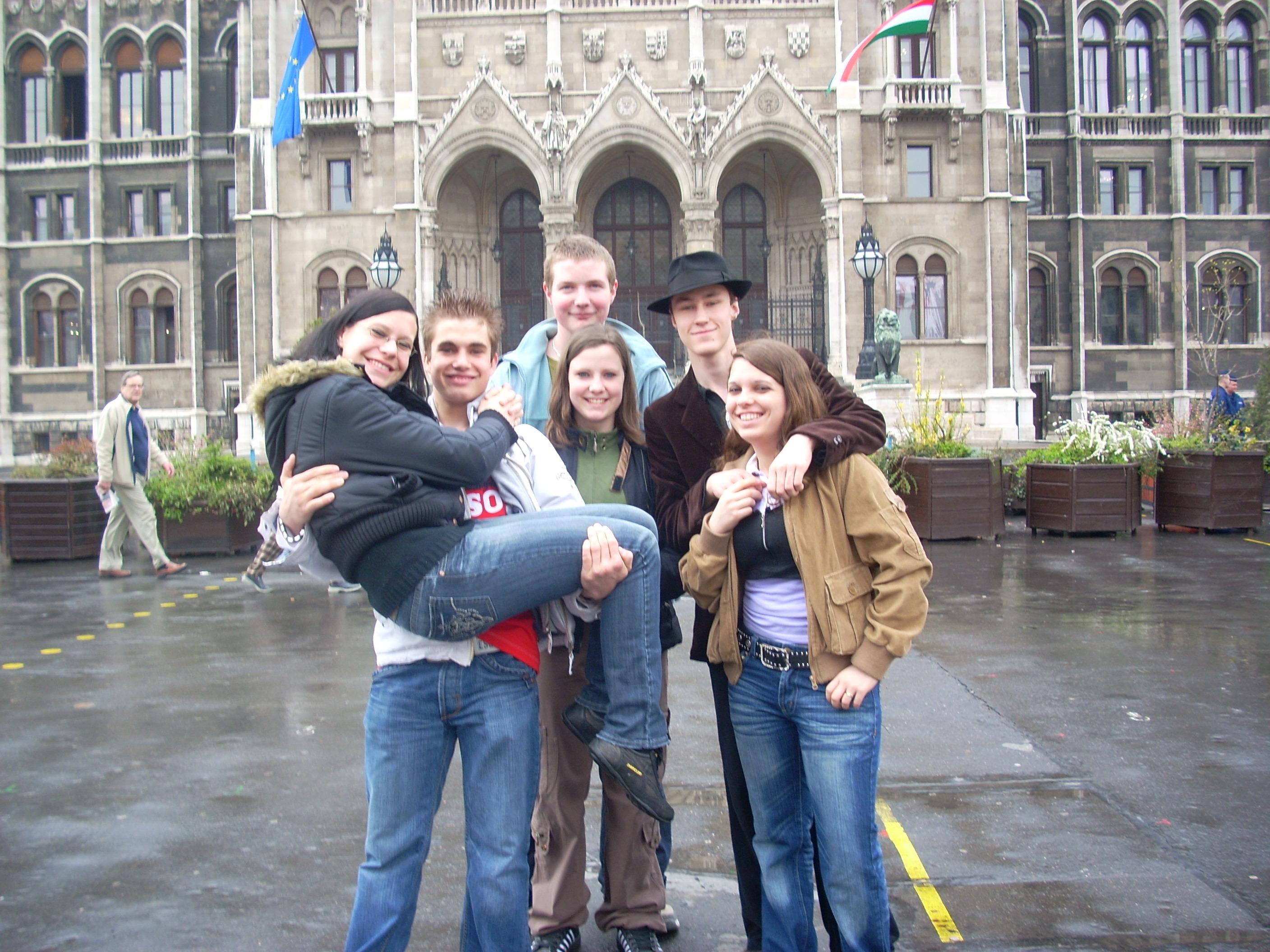
Why did you decide to build Jelenarchívum around campaigns? Did you have the opportunity to conduct a research project on the most common themes of everyday photography before choosing the theme of campaigns? After all, it sends a message about the project which themes the archive feels are specific and common to this image heritage.
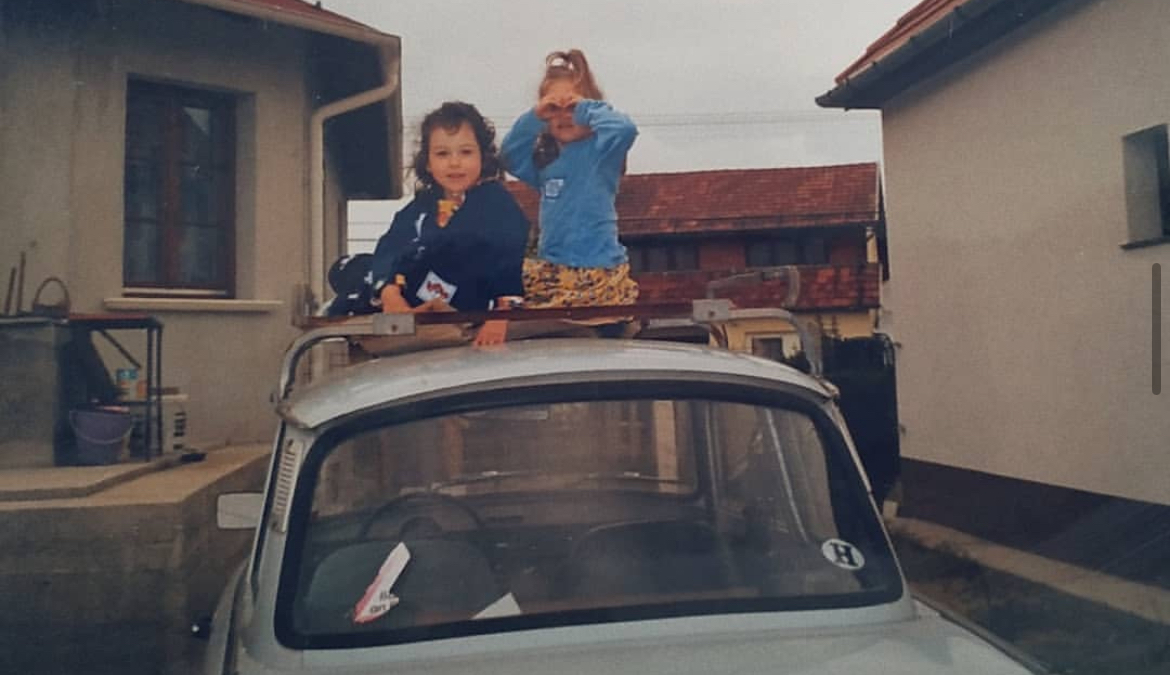
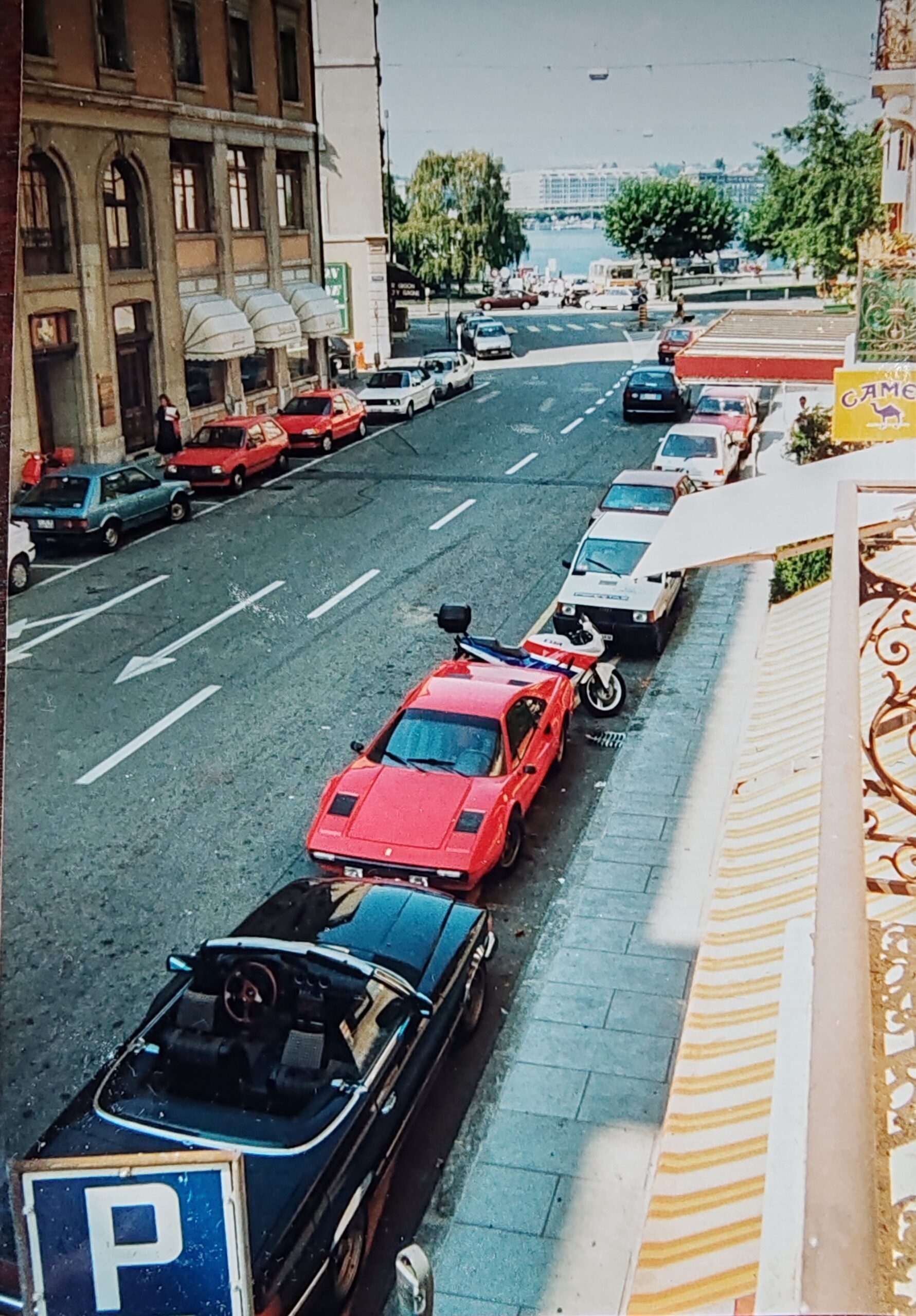
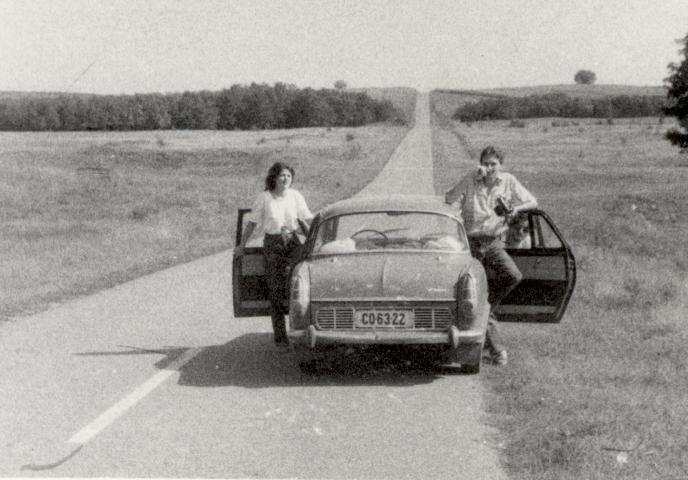
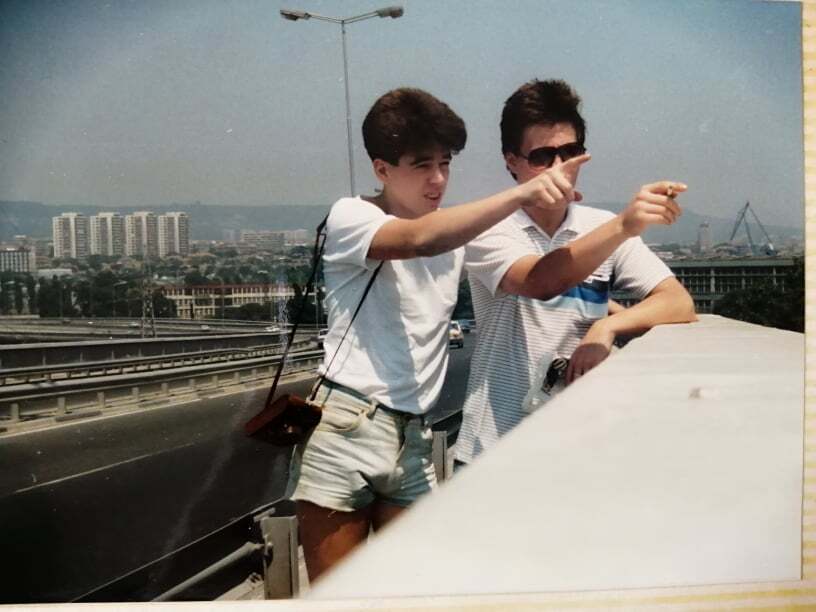
I am particularly concerned with trauma studies in my own practice. In many cases, oral history is trauma-based, i.e., thematically centered on trauma – as is a significant part of Hungarian vernacular photography collections. Oral history is often confused with some kind of crisis. As banal as it may sound, Jelenarchívum is an archive of happiness, so it is no coincidence that the project was announced by the Museum of Ethnography on 20 March, World Happiness Day. We are trying to focus on positive experiences, and we want to emphasise this a little by including the concept of nostalgia. Although the '90s are out of reach for many of us in the younger generation, there is a certain nostalgia for this period among our parents' generation – and I wanted to evoke this period with the second campaign, entitled Cars Heading to the Sea. This theme was inspired by the fact that after the change of regime, mobility increased significantly: more people travelled abroad, it became easier to buy cars – even Western ones – and the objects of consumer culture changed accordingly. Our campaign brief is to look at the first journeys and cars after the change of regime – but we are not excluding more recent pictures.
The campaign has already received many stories of coming of age and identity-shaping journeys. I'm particularly interested in these personal stories that are somehow connected to the identity of the uploader, and in these cases, I look at the photo as a vehicle for the stories. We also think in terms of campaigns because they allow us to find more thematic target groups who are willing to share personal stories.
What are the cornerstones that you, as an admin, would reject when approving uploaded material? What is the manifesto of Jelenarchívum from this point of view? Also, what will be the fate of the photographs uploaded to the website within the institution's collection?
The archive has a privacy statement, and our code of ethics is currently under development. Obviously, racist, pornographic, and offensive content will not be published, and the consent of all individuals appearing in the photo and story is required. In all cases, permission from the museum is also required for any future use of the photos – we have made it clear to uploaders that they are donating their photos to the museum’s archive when they upload them. Upon upload, photographs submitted to the Present Archive are not automatically given a separate file number, only an identification number. When they are included in an exhibition or publication, the museum staff will contact the source community again – and the photo’s ID number will then be converted into a file number.
What are the reasons behind the institution's decision to create a new platform, rather than partially integrating an existing social media platform? And what internal commitments exist regarding the long-term preservation of the images collected on the new platform? Unfortunately, the sudden disappearance of the Simon Kézai Programme (6) website and the dismantling of Indafotó (7) are recent and negative examples of this, while the Flickr Foundation – which aims to preserve Flickr’s photographic material for at least 100 years – has a very sympathetic international mission.
This is a question I have also asked myself in the context of the Indafotó events. When I joined the project at the end of last year, I was given the task of making the site as user-friendly as possible, together with the developers, and of filling it with stories while eliminating any bugs. I came to the conclusion that the aim of the website was to create a well-presented and distinct interface, similar to Fortepan. It may be that the website as a format will not even exist in fifty years, so let’s say this project is a gateway to eternity — and that the museum, as an institution, is what truly matters in the process of preservation.
The concept of the site is that it continues the work of Fortepan and aims to capture the period from the early ’90s to the present day — though we are currently focusing predominantly on the ’90s, and I want to see that era reflected in the stories. Of course, we also need to open up to other generations, but we are primarily looking for people with a shared interest in revisiting their photo albums and writing their stories. I am also aware, of course, that the project cannot offer a comprehensive picture of all layers of Hungarian society — and that is not the museum’s objective. We see it more as a preliminary research project.
Then the project will move in two directions. You are working on launching an organic uploader outreach, and alongside that, there is a blueprint for the networking and outreach work that needs to be done to access knowledge and resources.
Yes, I also work in art education. Since 2019, I have been an art teacher at the GYIK Workshop Foundation (8) – I run workshops and summer camps for children and adults. I also have a lot of empirical experience that I plan to apply in an initiative called the Petőfi Programme (9), which we will soon join with Jelenarchívum. As part of this programme, the museum will receive a list of rural locations, and we will travel there as the Jelenarchívum team. In collaboration with local community organisers and educators, we will conduct workshops aimed at encouraging communities to share their photographic material and stories.
Your archive picks up the thread at the optimism of the nineties. We are now living in a very different ("cybernetic") age that, at least for people in their twenties and thirties, is marked by a depressed and almost apocalyptic mood. Moving forward, aside from '90s optimism, are there other topics, especially other emotional atmospheres you would like to explore?
I don't think there are any concrete ideas yet, but they will evolve as the project develops. It is perhaps safer to start from the 1990s, as this is the starting point for the site's timeline following Fortepan’s activities, and because it allows us to narrow down the digital challenges to a more manageable scale — at least for now.I think the concepts of zeitgeist and nostalgia are the most motivating aspects of Jelenarchívum. Of course, many philosophers and art historians — from Zygmunt Bauman to Hannah Arendt — have dealt with memory and the notion of retrotopia. For me, looking at personal memory through private photographs and using them as a medium for storytelling are both primary ways of engaging with the 1990s in this project. The ’90s are still, in many ways, a neglected topic of research — every now and then an exciting film like Pelican Blue (10) appears, or nostalgic pop songs emerge, but they often refer more to the ’80s than the ’90s. I think people have a very strong sense of nostalgia and reminiscence, and that’s how I see the Jelenarchívum project.
Footnote
(1) "Jelenarchívum" loosely translates to "Archive of the Present" in Hungarian.
(2) According to the Museum of Ethnography’s website, the MaDok Programme focuses on preserving the contemporary material world and documenting the present within a museum context. The initiative acknowledges that in a social museum framework, the present does not require a dedicated institution, but rather a research program built on stable methodological foundations—carried out by participating institutions in alignment with their own missions. Instead of founding a new museum specialized in the present, the program aims to foster connections between diverse institutions and research projects, making them accessible through an integrated information system. The MaDok Programme’s primary objective is to promote networking and to establish a framework for institutional collaboration. In the long term, this also facilitates the planning and coordination of research efforts.
(3) Fortepan is a community photo archive based in Budapest, Hungary, established in 2010. Today, the archive contains thousands of digitised high-resolution archival photos that capture everyday twentieth-century life in Hungary. Fortepan photos are organized along an interactive timeline and are publicly available for anyone to search, tag, download, and use. Eidolon Centre has been working closely with Fortepan in recent years.
(4) “Cars Heading to the Sea" (Autók a tenger felé) is a reference to the song of the same title by the Hungarian alternative rock band Kispál és a Borz, one of the most important and popular groups among young adult intellectuals in Hungary during the 1990s and 2000s. Their music quintessentially and famously captures the optimism and longing of the generation that came of age just after the fall of the Iron Curtain. So, for this particular audience, it is a deeply evocative generational reference. An interesting parallel is that in the video for another song of theirs from the same album, Földtörténet, the band is heading toward the border in a Volkswagen Beetle.
(5) The Hungarian term "buhera" refers to an improvised, makeshift, or hacked-together solution—often creative, resourceful, and low-budget, but also unofficial, unregulated, and sometimes technically flawed. For more on this notion, read buhera club’s article titled Buhera as vernacularity here on Eidolon Journal.
(6) The mission of the Kézai Simon Programme was to create a nationwide movement aimed at digitally preserving memories and family stories captured on old photographs made with analog technology.
(7) Indafotó was a free service for users of Inda—a Hungarian new media company and blogging platform popular in the second half of the 2000s—allowing up to 250 MB of photo uploads per month, roughly equivalent to 400 images. Users could also define the permitted uses of their photos, collectively creating a website that hosted 13 million images. All of these were permanently deleted on March 31, 2025.
(8) Also known as Children and Youth Fine Arts Workshop, Budapest.
(9) The Petőfi Sándor Programme supports Hungarians living in diaspora communities in preserving and strengthening their Hungarian identity, with the help of scholarship recipients.
(10) Pelikan Blue (2023) is an animated documentary film directed by László Csáki, set in 1990s Hungary—a time when travel was no longer forbidden but remained largely unaffordable. Based on real events familiar to many Hungarian Gen X-ers, the story follows three young men who forged international train tickets, giving an entire generation the chance to experience the outside world—especially Western Europe, where free travel had been nearly impossible for decades during the Soviet occupation.
További cikkek
Egyetemista óra a Jelenarchívummal idegen nyelven - Hurrá dolgozunk! Ki a tanteremből
Az egész tanári pályám során legnagyobb kihívásnak a hallgatók motiválását tartottam. Ezért (is) érdekelt a kritikai pedagógia, inspirált Jacques Ranciere emancipált néző-elmélete, segített kísérletezni, fejleszteni a kortárs képzőművészet. A felsőoktatás mai állapotában nehéz teret, lehetőséget találni az efféle gondolkodás gyakorlati megvalósításához, de a Budapesti Metropolitan Egyetem, ahol immár negyedik éve „vendégeskedem”, épp ilyen. (Ha állásba mennék hozzájuk, valószínűleg rendszerszinten is lenne hatásom a dolgokra, de azzal magamat korlátoznám, s nem egykönnyen adom fel a szabadságomat. Hasznosabbnak, teljesebbnek és boldogabbnak érzem magam így függetlenként, röpködés közben.)
Tovább
„A fénykép azt az ígéretet hordozza, hogy képesek leszünk a valóság megragadására” – mondta egyszer Malcolm Gladwell kanadai újságíró. És valóban, megragadni, elkapni iparkodunk a pillanatot, mely akkor az egyetlenegy, és mely éppen kiválasztottsága okán lesz majd a jövőben az az egyetlen, különleges, fontos, retinára égett múltrebbenés. Fényképeinkkel megtartani igyekszünk, elvinni magunkkal az érzést, az illatot, a hangokat, nem a világnak készítjük őket, hanem magunknak – vagy valakinek, aki fontos. Egy mozdulatot, egy tekintetet, egy szoba fényét délután négykor, az esőcseppeket egy szürke szombaton, pocsolyába ugrást, öröklétbe karcolt ölelést, napfénybe fordulást nyári unalomban, kamerába koccintást valamikor, nem tudjuk már pontosan, mikor, de emlékszünk rá, hogy szerettük azt a napot. Ezek a képek nem „jó képek”, ezek a képek szükségesek. Nem esztétikai döntések eredményei, hanem érzelmi választások: nem akarjuk elfelejteni a pillanatot. Amiként Kálló Péter fotográfus mondta: „A fotográfia időutazás: a pillanat művészete, amivel meg tudjuk állítani az időt, és megállítani az időt egy csoda.”
Tovább
2025. június 3-án, kedden a MaDok-program szervezésében kerekasztal-beszélgetést szerveztük a Jelenarchívum megálmodóival, Török Andrással (Fortepan munkatársával) és Tamási Miklóssal (Fortepan alapítójával), valamint Forgách Anna fotográfussal, a Jelenarchívum egyik felöltőjével. A beszélgetést Martincsák Kata moderálta, aki a Jelenarchívum koordinátora, a Néprajzi Múzeum MaDok-program muzeológusa.
Tovább